

Our Tree Selection List
Large Trees (60-100 feet)
-
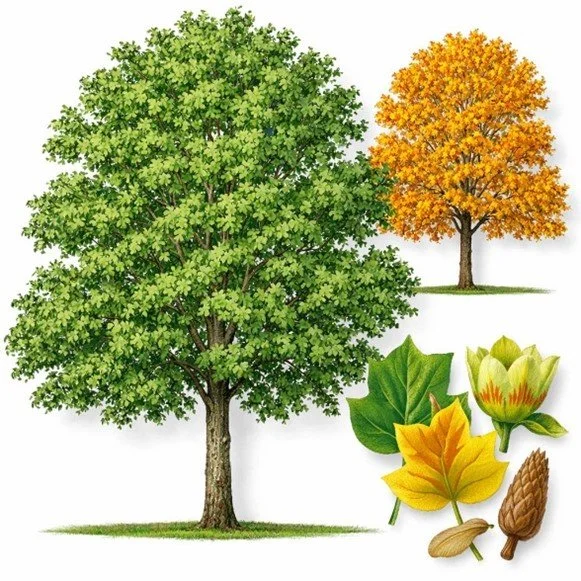
Tulip Tree (Liriodendron tulipifera)
60-90 feet at maturity
Fast annual growth rate
Brilliant, uniform golden yellow in Autumn
Produces distinct yellow-green tulip-shaped flowers in late spring; requires plenty of space to reach its full height
Best used as a large-scale shade tree or focal point in open areas
-
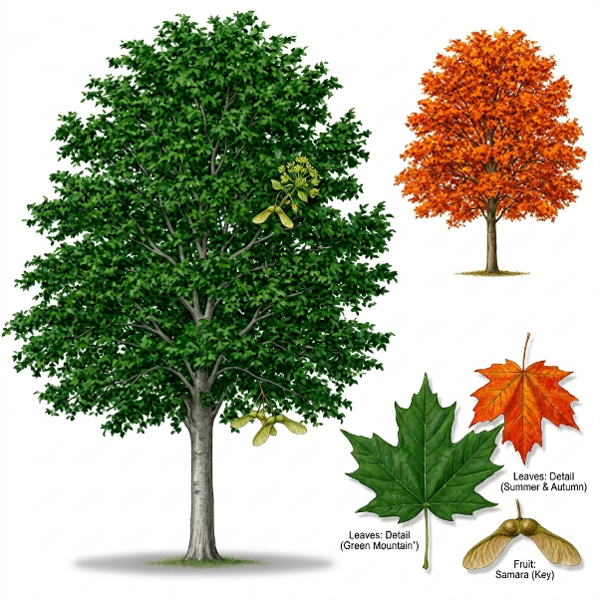
“Green Mountain” Sugar Maple (Acer saccharum)
40–60 feet at maturity
Fast growth
Orange and scarlet leaves in Autumn
Heat resistant
Provides early-spring nectar for bees and essential food and habitat for native birds, mammals, and caterpillars
-
Swamp White Oak (Quercus bicolor)
60–75 feet tall at maturity
Moderate growth rate per year
Golden-brown to russet or yellow-brown leaves in Autumn
Excellent large shade tree for big yards or parks.
Tolerates moist soils and some road salt
Slow to establish acorn crops; very long-lived
Medium Trees (30-50 feet)
-
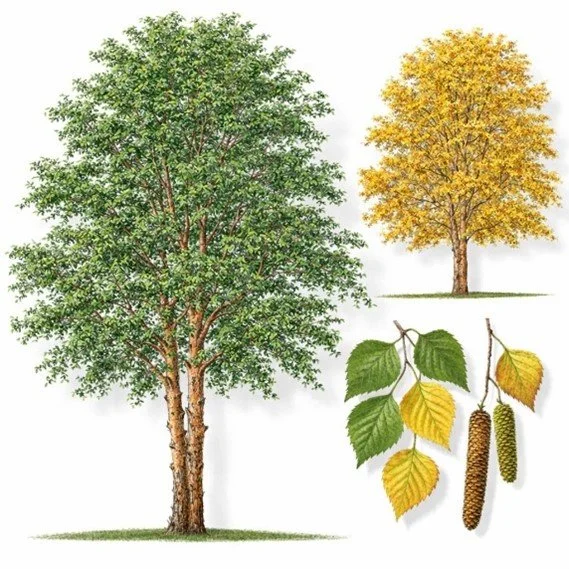
River Birch (Betula nigra)
40–50 feet at maturity
Fast annual growth rate
Glossy green leaves; yellow fall color
Exfoliating cinnamon-to-salmon bark provides strong winter interest
Highly tolerant of wet soils and flooding; adaptable to urban conditions
Wildlife value (seed catkins for birds; host plant for native insects)
-
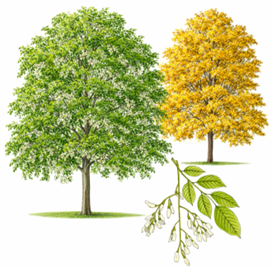
Yellowwood (Cladrastis kentukea)
30–50 feet at maturity
Moderate annual growth rate
Soft yellow leaves in Autumn
Attractive spring white blossoms
Best in well-drained soil; avoid extreme drought
-
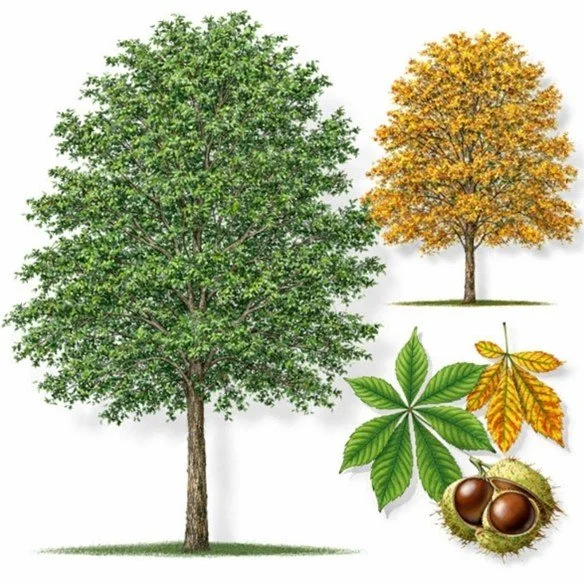
Ohio Buckeye (Aesculus glabra)
30–50 feet at maturity
Moderate annual growth rate
Palmately compound leaves; yellow to orange fall color (often brief)
Spring panicles of yellow-green flowers
Early leaf drop in late summer during drought or heat
Large nuts (buckeyes) valued by squirrels and other wildlife; toxic to livestock and pets
Small Trees (15-30 feet)
-
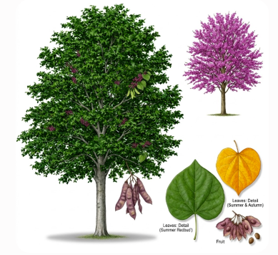
Redbud (Cercis canadensis)
20–30 feet tall at maturity
Moderate annual growth rate
Unique pea-like magenta/rosy-pink spring blooms on bare branches; heart-shaped foliage turning golden-yellow in fall
Multi-season specimen for woodland gardens, naturalized borders, or understory planting
Early-season nectar for native bees and pollinators; seed pods for birds and small mammals
-
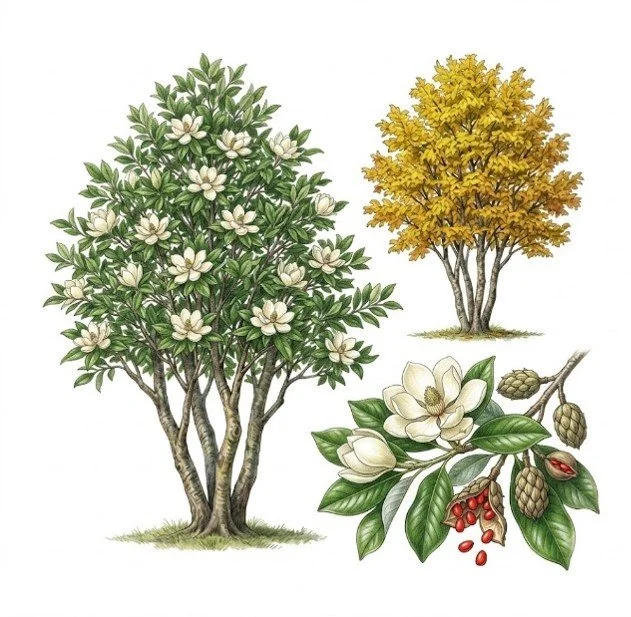
Sweetbay Magnolia (Magnolia virginiana)
15–25 feet at maturity
Moderate annual growth rate
Creamy white, lemon-scented early summer blooms; glossy foliage with silvery undersides
Excellent multi-season specimen for rain gardens, moist soil areas, or sheltered patio spaces
Red seed pods attract songbirds; avoids spring frost damage by blooming in late May to June